
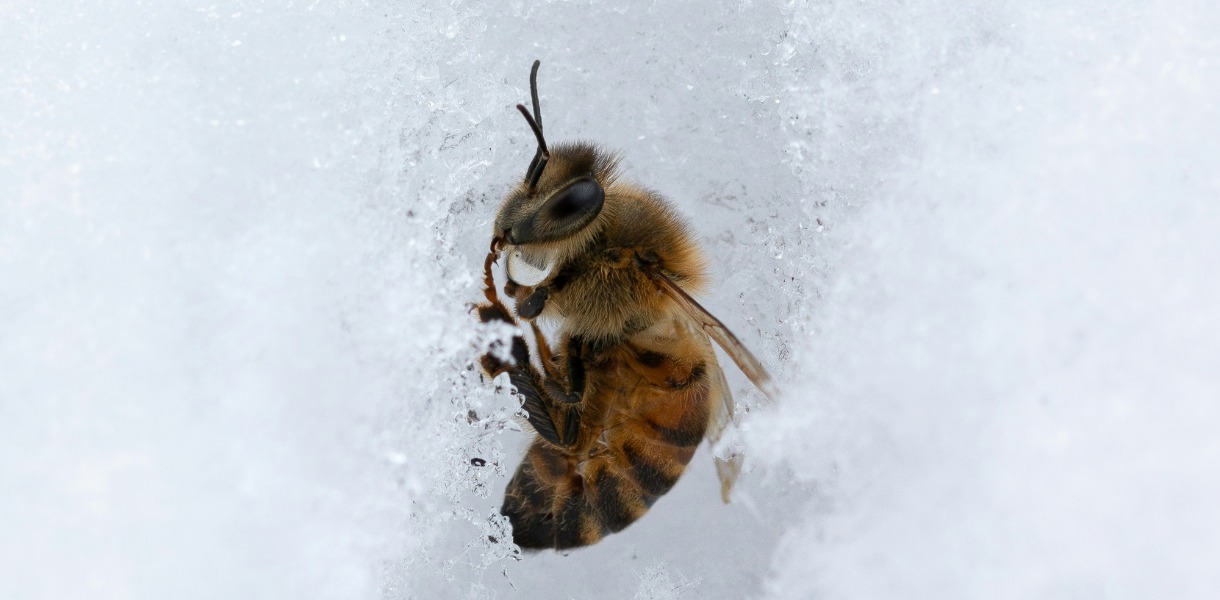
Once it gets cold, you stop seeing bees in the garden. So where do they go? Bears sleep through winter and lots of birds fly south, but honeybees don’t hibernate at all. They stay wide awake, tucked up inside the hive.
Staying warm in the winter cluster
Once it drops below 10°C, the workers and the queen pack together in a tight ball called the winter cluster. Basically a group hug that lasts all winter.

The workers shiver to keep warm, flexing and vibrating their flight muscles so they work almost like a living heater. Bees on the outside of the cluster act as a thick, insulating blanket while the ones inside stay cosy, and they keep swapping places so nobody freezes on the edge. Right in the middle of this buzzing ball of warmth sits the queen, kept at a steady, comfortable temperature.
On a mild winter day you might spot a few bees out for a quick flight. It’s often called a cleansing flight, which is the polite way of saying they’ve popped out for a loo break.
Running on summer’s honey
Keeping that heat going takes a lot of energy. All through spring and summer the colony forages for nectar and pollen and turns it into honey, and that store is what gets them through. A single hive can get through anywhere from 30 to 90 pounds of honey in one winter.
Helping wild bees this winter
Even though bees are masters of survival, winter can still be tough. Honeybees have beekeepers looking out for them, but bumblebees and solitary bees rely on our gardens. A few easy ways to help:
- Leave the garden a bit wild, and consider it official permission to skip the leaf raking. Leaf piles and hollow plant stems make safe shelter for overwintering insects, so don’t clear every last one.
- If you’re somewhere milder, plant things that flower in winter or early spring, like ivy or winter heather. Bumblebees waking up hungry need that nectar.
- Skip the pesticides, so your garden stays safe for them all year.
Look after them now and they’ll be back buzzing round your garden in spring.


